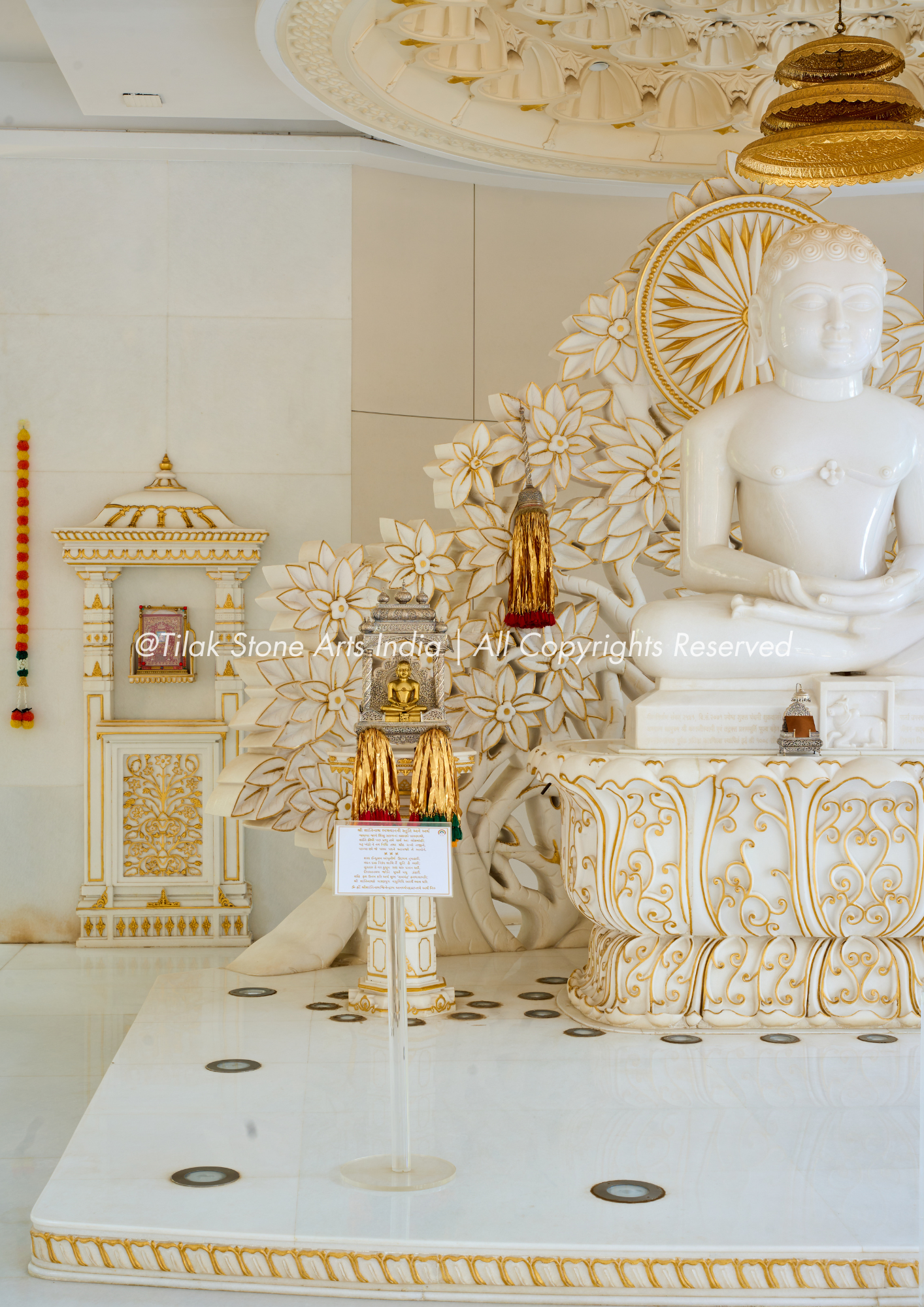
A luxury pooja room gets judged on the day it is unveiled, yet its real test comes each morning after being placed. Ghee lamps and dhoop slowly mark white stone, and brass dulls near the flame. The room stays as calm in year five as in week one when luxury pooja room suppliers plan for this daily wear/tear.
Personalised design is how that happens. Each lamp gets a fixed spot with a clear path for its smoke, and each silver vessel gets its own drawer. Planning with luxury pooja room suppliers settles these choices on paper first, so the finished room serves the family that prays in it every day.
Ritual Wear That Pooja Room Plans Often Overlook
Soot and Oil on White Stone: Daily lamps and incense mark a pooja room faster than any other room in the home. Grey soot gathers on the stone directly above a diya, and ghee splashes darken the platform where lamps are refilled. Stone restorers routinely clean soot halos from marble rooms barely two years old, because nobody planned where the smoke would go.
Why Delay Makes the Damage Harder: Oil stains that sit for months sink deeper into marble, since the stone is porous and draws liquid in. Smoke trapped in a closed room also lowers indoor air quality for whoever sits there longest. Adding a vent after a carved ceiling is fixed often means lifting finished panels, so early planning costs far less.
See also: How Blockchain Technology Can Support Environmental Monitoring
Layouts Planned around Room Shape and Family Worship
Reading the Shape of the Room: Room shape decides the layout more than square footage does. A long, narrow room suits a temple on the far short wall, facing whoever enters. A large square room can hold a freestanding structure with space for parikrama around it. Seasoned luxury pooja room suppliers weigh these options early, so the layout suits your room.
Rituals and Family Customs: Specific rituals bring requirements a standard plan misses. A household that performs havan needs a fire-safe stone zone and a high vent, while Krishna devotees may want a ceiling hook for the Janmashtami jhula. Vastu also advises keeping photographs of departed ancestors outside the pooja room. Respecting these customs makes the room a restorative environment.
Design Features That Age Well in a Sacred Room
Carved Panels and Brass Finishes: Carved marble panels can tell a story rather than repeat a pattern. A row of panels showing the ten avatars of Vishnu gives a side wall meaning beyond decoration. Brass needs choosing with care, since unlacquered brass darkens into a warm patina while lacquered brass stays bright but loses its coating under harsh polish.
Backlit Stone and Built-In Temples: Backlit onyx needs a hidden service hatch, because LED drivers wear out long before the stone does. An integrated temple set into a wall recess saves floor space and lets cables run behind the stone. Super fine white Vietnam marble suits these built-in temples and keeps an even white across large surfaces.
A Single Temple Wall versus a Fully Clad Pooja Room
The Temple Wall Approach: A marble temple set against an otherwise painted room costs less and finishes sooner. It suits families who want the temple as the main investment and plan to upgrade later. The trade-off shows over time, as painted walls beside daily lamps yellow and need repainting, and plain plaster next to fine stone can look unfinished.
The Fully Clad Approach: Cladding walls and floor in stone costs more and adds weight, so upper-floor rooms may need a structural check. Full cladding lets luxury pooja room suppliers plan the temple and its surroundings as one composition that wipes clean after rituals. A mixed palette, such as a Vietnam marble temple framed by wonder white marble walls, balances budget and finish.
Concept Discovery Sessions and Custom Design Milestones
Concept Discovery before Commitment: A custom project starts with a concept discovery session, where the family and design team discuss the space and the mood it should carry. Site photographs and dimensions are enough to begin. Some specialists also offer a virtual tour of completed pooja rooms, so you can judge scale and finish from home first.
Trained Designers and Global Delivery: Mandir designers taken on visits to understand both stone and aesthetics know how each marble behaves once carved. That knowledge decides which stone sits near a lamp and which suits a carved wall, protecting the room for decades. Families abroad receive packing videos before dispatch, and a scheduled call guides unpacking and installation.
Small Coordinated Choices That Ease Daily Worship
Planning the Details Together: Everyday worship runs smoothly when storage, deity placement, lighting and flooring are decided together, since each one affects the others. Thoughtful luxury pooja room suppliers settle these details on the drawing rather than leaving them to the installers on site. The following small choices tend to shape daily use the most.
- A lockable drawer keeps silver vessels and the deity’s ornaments apart.
- Vastu keeps murtis from facing each other and the room off bathroom walls.
- Lamp niches sit well away from backlit panels and carved ceilings.
- A separate cupboard holds festival lamps and decorations between seasons.
- A floor inlay border at the doorway marks where footwear stops.
Lasting Beauty for a Room Used Every Day
A pooja room designed around real rituals keeps its calm look and practical comfort for decades. Waiting until stains and soot appear only turns planning into repair work. Share photographs and measurements of your space, and request a concept discovery session to plan a room shaped around your family’s daily worship.
