Price often dominates discussion in hospital furniture tenders, but the technical bid can determine which bidders stay in contention before financial bids are opened. A technical bid evaluation committee checks whether a bidder can provide furniture suited to the stated clinical use, site conditions, documentation requirements and service expectations.
An Indian exporter preparing for a Gulf hospital tender needs documents that meet destination-market expectations. That is why some manufacturers describe themselves as a medical furniture supplier for Saudi Arabia rather than as domestic vendors. Committees need enough evidence to compare bidders on equal terms, even when product designs look similar in a brochure.
Why Samples Get Inspected First
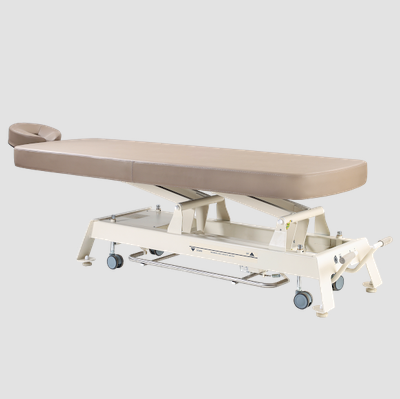
Inspecting a sample lets a tender committee compare product claims against a physical item before those claims become supply obligations. Catalogues may call a couch washable or stable, but only equipment on hand lets the committee judge access, finish quality and how its moving parts work.
A search-result extract from a 2018 Indian government tender document indicated that bidders could submit samples or equipment before technical evaluation. Physical inspection is not required for every Indian tender, but the extract helps explain why a committee may request a sample when upholstery, frame construction or adjustment mechanisms affect daily clinical work.
A sample may also reveal an unclear specification. A backrest adjustment that looks adequate on a drawing may provide poor support during a dermatology procedure. A trolley might meet the stated dimensions yet remain awkward to clean around. Procurement teams should record the committee’s observations rather than rely on impressions from a brief inspection.
What a Tender Law Protects Against
A formal tender law lets buyers assess bidders by documented criteria rather than informal preference. A U.S. government trade briefing reports that Saudi Arabia’s Government Tenders and Procurement Law was passed in 2019 to support transparent, organised and fair procurement, giving bidders equal opportunity.
An Indian hospital committee can apply the same discipline without copying Saudi Arabia’s public procurement process. It should specify what evidence it will accept, assess every bidder against that standard and record why a bid fails to meet a technical requirement.
Loose criteria can lead to avoidable disputes after bids are opened. One bidder may argue that an alternative material is equivalent, while another has priced the material listed in the BOQ, or bill of quantities. A written basis helps the committee decide whether the alternative suits the intended clinical use without causing later maintenance problems.
Centralised Buyers Change Rules
Centralised purchasing raises the cost of inconsistency, since one buying organisation may serve numerous hospitals and departments. The same Saudi trade briefing identifies NUPCO as the country’s largest centralised organisation for healthcare procurement, storage and distribution of pharmaceuticals, medical equipment and supplies.
A central buyer needs records that teams can review without interpreting them differently. The bidder’s product sheet, warranty wording and manufacturing declaration should match. Even a seemingly minor contradiction during evaluation can hold up approval as the purchase passes among procurement, clinical users and facility teams.
For an Indian hospital group operating several sites, a single approved supplier panel creates a similar practical challenge. A furniture specification broad enough to cover every department may fit none particularly well. Before comparing offered models, the committee should name the intended setting, such as an OPD examination room or a physiotherapy unit.
Why a Registry Matters
An official registry lets procurement teams verify whether a medical product is listed under its stated manufacturer and current status. The Saudi medical equipment registry shows the brand name, classification, manufacturer name, and whether each medical equipment entry is active or inactive.
The Saudi register does not show that every item of clinical furniture needs registration, so committees should not make that assumption. The narrower point is traceability: in a destination market with an official register, bidders should be prepared to provide documents linking the offered product to its manufacturer and regulatory status.
A missing or outdated document creates uncertainty at the most difficult stage of the process. Procurement staff may have to ask whether the offered item is the one approved, whether the manufacturer has changed, or whether the bidder is authorized to supply it. Technical evaluation is where these questions should be resolved, before a purchase order is issued.
Documents Strong Bids Keep Ready
A strong technical bid gives the committee evidence it can verify without asking the bidder to explain basic details. Tender documents should make clear what the bidder offers, who is responsible for it, and what support applies if the furniture fails in use. Depending on the tender and destination market, these records provide a sound starting point:
- The bid should include registration or compliance proof where the tender or destination market requires it.
- The bid should include written warranty terms naming the covered furniture and responsible party.
- The bid should include an after-sales service commitment with a contact and response process.
- The bid should include manufacturing or authorisation proof connecting the bidder to the offered product.
Written warranty terms matter because clinical furniture cannot always be taken out of service without disrupting appointments or procedures. Proof of manufacturing or authorisation also lowers the risk that a bidder presents one product for evaluation, then proposes a different source after the award. If documents do not identify the same model, manufacturer or scope of supply, the committee should seek clarification before scoring.
See also: What Home-Based Food Producers Must Check Before Their First Sale
Before You Score the Next Bid
Technical evaluation works when the committee treats every requirement as an operational safeguard rather than a formality. Physical inspection checks whether offered furniture matches the written claim, documentation checks whether the supply chain can be traced, and warranty wording identifies who must respond when equipment cannot remain in service.
A lower price cannot correct a vague technical offer after commissioning begins. Review the current technical bid checklist against sample inspection, documentation traceability, written warranty terms and after-sales responsibility before the next tender closes.
